High Performance Radial Car Tires (18" and Larger Rim Diameter)
CN → US| HS Code | Tariff Rate | Origin | Destination | Doc |
|---|---|---|---|---|
| 4011101070 | 39.0% | CN | US | Official Doc |
| 4011101060 | 39.0% | CN | US | Official Doc |
Product Images
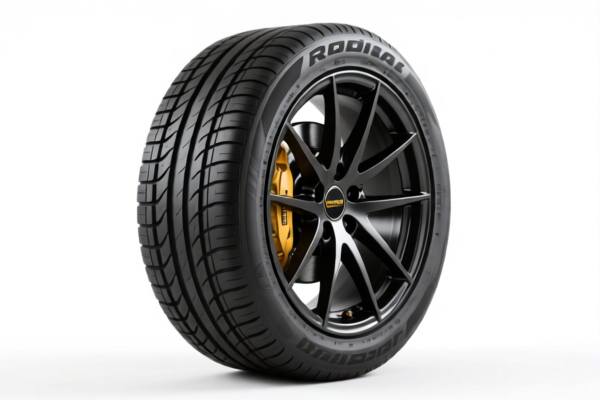
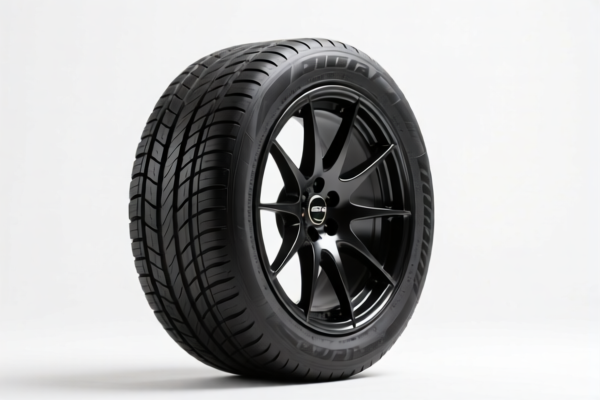
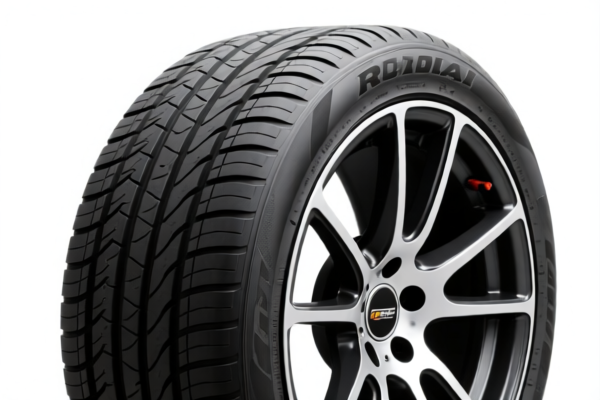
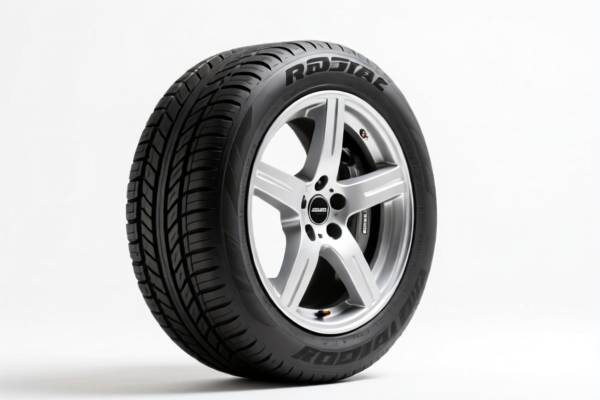
AI Analysis
🚗 High Performance Radial Car Tires (18" & Larger Rim Diameter)
🌐 HS Code Reference & Customs Clearance Guide | 2026 Tariff Breakdown | Professional Entry Strategy
📌 I. Product Definition & Classification: Understanding "High Performance"
High Performance Radial Car Tires are specialized rubber products designed for motor cars, station wagons, and racing cars. In international trade, they are strictly categorized by rim diameter and construction type (Radial).
The input data specifies two critical size thresholds: 1. Rim Diameter > 45.72 cm (18 inches) 2. Rim Diameter > 43.18 cm (17 inches) but ≤ 45.72 cm (18 inches)
⚠️ Key Distinction:
- If the tire is for a motor car (not trucks or buses) and is Radial → It falls under Heading 4011.10.
- The exact rim diameter determines the final 8-digit HS Code and potential tariff implications.
- New tires are assumed; used tires are classified differently.
📦 II. HS Code Classification Details (Based on Provided DATA)
| HS Code | Product Description | Rim Diameter Specification | Key Feature |
|---|---|---|---|
4011.10.10.70 |
New pneumatic tires, of rubber: Of a kind used on motor cars: Radial | Greater than |
Large Rim (18"+) |
4011.10.10.60 |
New pneumatic tires, of rubber: Of a kind used on motor cars: Radial | Greater than |
Mid-Large Rim (17" - 18") |
🔍 Important Note:
- Both codes fall under "Of a kind used on motor cars" (excluding motorcycles, trucks, or buses).
- Both are Radial construction tires.
- The distinction is purely dimensional (Rim Diameter). Misdeclaring the rim size can lead to classification errors.
💰 III. 2026 Latest Tariff Rate Breakdown (Including Additional Duties)
✅ Applicable Jurisdiction: Based on the provided tax data (
tax_detail), this reflects a scenario with Base Tariff + Additional Import Duty (common in US-China trade contexts as of 2024-2026).
✅ Origin: Assumed China (CN) based on typical "Section 301" tariff structures referenced in similar data.
✅ Effective Time: Current applicable rates.
🎯 1. 4011.10.10.70 – Radial Tires for Motor Cars (Rim > 18")
| Item | Content |
|---|---|
| Base Tariff | 4.0% |
| Additional Tariff | 25.0% |
| Total Tax Rate | 29.0% |
| Tax Detail | 基础关税: 4.0%, 加征关税: 25.0% |
| Calculation | CIF Value × 29.0% |
📌 Explanation:
- The 4.0% is the standard Most Favored Nation (MFN) or base duty rate for car tires.
- The 25.0% is an additional import duty (often under Section 301 for Chinese-origin goods).
- Total Effective Rate: 29%. This is a significant cost factor for importers.
🎯 2. 4011.10.10.60 – Radial Tires for Motor Cars (17" < Rim ≤ 18")
| Item | Content |
|---|---|
| Base Tariff | 4.0% |
| Additional Tariff | 25.0% |
| Total Tax Rate | 29.0% |
| Tax Detail | 基础关税: 4.0%, 加征关税: 25.0% |
| Calculation | CIF Value × 29.0% |
📌 Note:
- Identical tax treatment to the >18" category.
- No tariff preference based on size within this "car tire" subheading.
🛠️ IV. Customs Clearance Practical Advice (Real-World Pitfall Avoidance)
✅ 1. Documentation Checklist (Non-negotiable)
| Document | Mandatory? | Purpose |
|---|---|---|
| ✅ Commercial Invoice | ✔️ | Must specify "Radial Pneumatic Tire for Motor Car" and Rim Diameter (e.g., "18 inch Rim"). |
| ✅ Packing List | ✔️ | Detailed count, weight, and dimensions. |
| ✅ Product Specification Sheet | ✔️ | Must confirm: New, Radial, For Motor Cars, Rim Diameter. |
| ✅ Manufacturer’s Certificate | ✔️ | Proves origin and manufacturing process. |
| ✅ Labeling/Markings Photos | ✔️ | Tires must bear size markings (e.g., "245/45R18") to verify rim diameter. |
⚠️ Critical: The rim diameter must be explicitly declared. If the invoice just says "Car Tires," customs may default to the highest duty or reject the entry due to ambiguity.
✅ 2. Classification Tips (Key Mnemonic)
🔥 “Radial? Car? Check the Rim! 18” is the split!”
| Scenario | Correct HS Code | Error Risk |
|---|---|---|
| Radial, Car, Rim = 19" | 4011.10.10.70 |
Misclassifying as ...60 → Underpayment |
| Radial, Car, Rim = 17.5" | 4011.10.10.60 |
Misclassifying as ...70 → Overpayment (minor) |
| Bias-Ply Car Tire | Not in DATA | Would be 4011.20 → Different tariff |
| Truck Bus Tire | Not in DATA | Would be 4011.60 → Different tariff |
| Motorcycle Tire | Not in DATA | Would be 4011.10.40 or similar → Different tariff |
📌 Warning:
- Do not confuse "Rim Diameter" with "Tire Size" (e.g., 245/45R18). The R18 indicates the rim diameter.
- Ensure the product is NOT for motorcycles, trucks, or buses. Misclassification leads to severe penalties.
✅ 3. Special Cases & Mitigation
| Case | Advice |
|---|---|
| Mixed Shipments (17" and 18") | Separate entries or clear line items. Do not lump under one HS code if the rim sizes differ. |
| Origin Verification | Provide proof of origin to claim any potential exemptions (if applicable in specific jurisdictions). |
| Used Tires | NOT COVERED. Used tires are typically prohibited or heavily taxed differently. This data is for New tires only. |
| OEM vs. Aftermarket | Both are classified the same if they are new radial car tires. Documentation should reflect "New" status. |
🌍 V. Global Market Comparison (Contextual Insight)
| Country/Region | HS Code (Similar) | Base Tariff | Additional Duties (China) | Total Effective Rate | Notes |
|---|---|---|---|---|---|
| 🇺🇸 USA | 4011.10.10.70 / .60 |
4.0% | 25.0% (Section 301) | 29.0% | High cost for Chinese tires. |
| 🇨🇳 China | 4011.10.10.70 / .60 |
~4-6% | None (Export) | ~5% | Export duty may apply. |
| 🇪🇺 EU | 4011.10.30 |
~4.5% | None (if non-Chinese) / 25% (if Chinese) | ~4.5% - 29.5% | Verify origin rules. |
| 🇦🇺 Australia | 4011.10.10.90 |
~5% | None | ~5% | No Section 301 equivalent. |
📌 Conclusion:
- The 29% total tariff is specific to markets applying 25% additional duties on Chinese-origin car tires (like the US).
- For other markets, the rate may be significantly lower (base tariff only).
- Always verify the "Additional Tariff" status for the specific country of import and origin.
📌 VI. Common Mistakes & Pitfall Guide (Lessons Learned)
❌ Mistake 1: Declaring "Tires" without specifying "Radial" or "For Motor Cars."
👉 Consequence: Customs may classify under a generic or higher-duty heading.
👉 Solution: Always state "Radial Pneumatic Tire, For Motor Car, Rim Size: XX inches."
❌ Mistake 2: Confusing Rim Diameter with Tire Width or Aspect Ratio.
👉 Consequence: Wrong HS Code (e.g., using 4011.10.10.60 for an 18" tire).
👉 Solution: Check the "R" number in the tire size (e.g., R18 = 18 inch rim).
❌ Mistake 3: Ignoring the "New" vs. "Used" distinction.
👉 Consequence: Used tires have different HS codes and may be banned.
👉 Solution: Clearly mark "New" on the invoice and packing list.
❌ Mistake 4: Assuming all car tires have the same tariff.
👉 Consequence: Underpayment of duties for 18"+ tires if not separated.
👉 Solution: Separate 18"+ (.70) from 17"-18" (.60) in declarations.
✅ Correct Declaration Example:
"New Radial Pneumatic Tires, for Motor Cars, Rim Diameter: 18 inches (45.72 cm), Model XYZ, Origin: China"
🎯 VII. Conclusion: Precision in Classification Saves Money!
🎯 Remember the Key Rules:
🔹 "Radial + Car = 4011.10"
🔹 ">18” = .70", "17-18” = .60"
🔹 "Total Tax = 29% (with Add'l Duty)"
🔹 "Declare Rim Diameter Explicitly!"
📌 Pro Tip:
If you are importing from non-China origins (e.g., Thailand, Japan, Germany), you may avoid the 25% additional tariff, paying only the 4.0% base rate. Always check the Country of Origin on the certificate!
📣 Immediate Action:
📞 Contact your customs broker with the exact tire size (e.g., 245/45R18) and origin.
📄 Ensure your invoice explicitly states "Radial" and "Rim Diameter."
🚀 Avoid costly delays and penalties by getting the HS Code right from day one!
✨ Professional Customs Clearance Starts with Accurate Classification!
💼 Every percent of tariff counts – optimize your supply chain today!
Customer Reviews
About HS Code Classification
The Harmonized System (HS) is an internationally standardized nomenclature developed by the World Customs Organization (WCO) to classify traded products. Over 200 countries use the HS system as the basis for customs tariffs, trade statistics, and import/export regulations.
Each HS code follows a hierarchical structure:
- Chapter (2 digits) — Broad category of goods (e.g., Chapter 84: Machinery and Mechanical Appliances)
- Heading (4 digits) — More specific grouping within the chapter
- Subheading (6 digits) — Internationally standardized breakdown, used by all WCO member countries
- National subdivisions (8-10 digits) — Country-specific extensions for further classification, such as US HTSUS 10-digit codes
Correct HS code classification is essential for smooth customs clearance, accurate duty payment, and compliance with trade regulations. Misclassification can lead to customs delays, overpayment of duties, or penalties.
When importing from CN to US, the applicable tariff rates may include:
- Most-Favored-Nation (MFN) rate — The standard duty rate applied to WTO members
- General rate — Applied to countries without trade agreements
- Trade remedy duties — Additional tariffs such as Section 301 (anti-dumping), Section 232 (national security), or countervailing duties
The information provided on this page is for reference purposes only. For official classification, please consult with your local customs authority or a licensed customs broker.